
CONTENT PAGE


1. CONSTRUCTION MATERIALS
NATURAL OCCURRING SUBSTANCES
- Limestone
- Softwood
- Mudbrick
- Bamboo
- Wet-laid clay walls
MAN-MADE CONSTRUCTION MATERIALS
- Glass
- Bricks
- Concrete
NATURALLY OCCURRING SUBSTANCE

1. LIMESTONE
PROS
- Affordability compared to other natural stones
- Soft and light
- Extremely durable due to high mineral composition
CONS
- High maintenance
- Soft nature

2. SOFTWOOD
PROS
- Work ability, can be used across a broad range of applications
- Sustainability, a renewable source
- Cost, tends to be cheaper
- Easier to source
CONS
- Weaker and less durable
- Less suitable for high traffic areas
- Poor fire resistance unless being treated

3. MUDBRICK
PROS
- Good water resistance
- Risk of cracking and shrinkage is low
- Offers good flexibility in construction
- Attractive textures and patterns
CONS
- Flooring surface would not be as smooth
- Requires often maintenance
- Low resistant to stain due to its high porosity

4. BAMBOO
PROS
- Extremely hard and durable
- Bamboo flooring is easier on the legs
- Easy to clean and maintain
CONS
- Cost is high for bamboo due to a high demand
- Poor treatment process will cause dis-benefits to the people
MAN-MADE CONSTRUCTION MATERIALS


1. GLASS
Glass is a very versatile material. It has the ability to transform the appearance of light and intensify colors.
PROS
- Transparent
- Hard and has great impact resistance
- Weather and chemical resistant
- Available in any color and shape
CONS
- Brittle
- Traps heat
How Is Glass Used?
From our site visit to The Shoppes at Marina Bay Sands, we observed that glass are used for the handrails, ceiling and at shop fronts.
The long stretch of the ceiling is filled with glass. The handrails are also glass. This may be done to provide an open and bright environment for shoppers.

2. BRICKS
PROS
- ECO-Friendly, There is an abundance of materials to make bricks and absorbs humidity better
- Fire and weather resistant
- Low Maintenance. No issues termites and it does not require to be painted
- Blocks out sound quite well due to its thickness
- High-thermal insulator
- Decay resistant
- Long lasting
CONS
- Expensive
- Limited color choices
- Weather can cause the bricks to expand and contract
- Difficult remodelling

3. CONCRETE
PROS
- Durable. Concrete can withstand large amounts of foot traffic and pressure
- Near impossible to chip or scratch the material
- Long Life span
- Easy to maintain. Dust or sweep to prevent dust accumulation
- Cost effective
- Slip resistant and chemical resistant
CONS
- It is a hard material. And provides no cushioning. Making it uncomfortable to stand on for long periods
- Cold to the touch. Concrete does not retain heat very well
- Susceptible to moisture if not properly finished or sealed
- Loud when there is a lot of foot traffic.

4. PLASTIC
PROS
- Long life span
- Plastic products/materials can be redesign
- Cheap and easy to produce/make
- Important for construction and infrastructure
- Not prone to breakage/ fragile
CONS
- Durability, short useful life compared to metal
- Non-biodegradable
- Harmful to the nature during the fabrication of plastics

5. STEEL
An alloy of iron and carbon hence explaining its durability. The world’s most important engineering and construction material
PROS
- Safe material to work with for residential construction
- Reduced construction costs due to the advance in steel fabrication techniques
- Comparatively lightweight
- Recyclability
- Durability
- Cost effective for the transportation of steel
CONS
- Susceptibility to the elements, weakens the cohesiveness of the material
- Long-term fatigue due to extensive application of tension to the material
- Excellent conductor of heat, does not play a benefit in a case of fire
2. FLOOR COVERINGS AND FINISHES
TYPES OF FLOORING
- Tile (ceramic, porcelain, mosaic)
- Natural Stones (marble, travertine, granite, quartz, terrazzo, )
- Hardwood (vinyl, engineered, solid)
- Carpet
NATURAL STONES


BLACK GRANITE
Granite is an intrusive igneous rock with large visible mineral grains . Granite comes in a multitude of colors . Black granite is commonly used for kitchen counter tops, bathrooms etc.
PROS
- Fire-proof
- Heat resistant
- Not susceptible to scratches
- Resistant to corrosion
- Available in wide range of colors from pink, white, variations of grey and black
- Extremely Durable
- Requires low maintenance
CONS
- Porous
- Expensive

2. UNIQUE MARBLE
PROS
- Beautiful and aesthetically pleasing
- Unique cause of veins details book matched in 2 pieces
CONS
- Heavy
- Expensive
- Stain easily
- Degrade over time
Can be used in: kitchen, monuments, interior decorations

3. SANDSTONE
PROS
- Variable through grey, yellow, red to white reflecting the variation in mineral content and cement.
- Every piece is unique and different
- Durable
- Eco-friendly
- Easy to repair
CONS
- Gritty to touch
- Porous
- Slippery
- Stains
Can be used in: walkways, indoors, porches, pillars, stairs

4. TRAVERTINE
PROS
- Durable
- Easy repair
- Long lasting
- Anti-slip
CONS
- Costly
- High maintenance
- Heavy
Can be used in: pool decks, courtyards, driveways

5. TERAZZO
PROS
- Durability
- Limitless designs, embeds marble, granite, quartz or glass chips with resin
- Environmentally-friendly, helps in design of sustainable buildings
- Both indoor and outdoor applications
CONS
- High initial cost
- Does not retain heat well
- Requires professional installation, as it it complex to install
Can be used in backsplashes, flooring and countertops

6. Limestone
PROS
- Cheaper cost than other natural stones installation
- Durability
- Natural aesthetics, beautiful and pristine look
- Flexibility, could be cut into the size that you desire
- Short and simple manufacturing process
CONS
- Easily stained
- Rather hard to maintain
- Easily damaged/chip due to its natural soft material
- Special installation due to its heavy weight
Can be used for floors and walls

7. Onyx
PROS
- Wide variety and differing colors, very strong appealing appearance
- Heat resistant
CONS
- Expensive since its a very rare stone
- Fragility
- Soft nature
- Very high maintenance
TILES AND FLOOR FINISHES


GENERAL INFORMATION
THICK TILES (20mm)
THIN TILES (3-6mm)


Grout lines between tiles
Width distance ( 2-3mm)
Prevent tiles from cracking
Help straighten tile lines

1. CERAMIC TILES
PROS
- Highly water resistant, helps in stain protection
- Good insulators of heat
CONS
- Less durable
- Rougher
- Heated at a lower temperature hence particles are less closely packed
TILES
Tiles are mainly made from the European countries like Portugal, Spain, Italy and then in Asia such as China, Vietnam and Malaysia where resources are cheaper
Ceramic tiles have either a white and red body, similar properties but are of different materials . Ceramic tiles is most suitable more many applications. And are one of the most commonly used tiles.


2. PORCELAIN TILES
PROS
- Low maintenance
- Highly durable
- Resists wear, last better over the years than ceramic tiles
CONS
- Harder to cut into any desired shape
Glazed Porcelain
- Visually appealing
- When tile is scratched its obvious to the naked eye


Many design patterns like marble, stone, concrete, fabric, wood, floral pattern and graph paper effect
FULL BODY HOMOGENEOUS


- Not many design patterns
- Essentially means unglazed tiles
- Not visible to the naked eye when tile is scratched
PROS
- It is not a porous material. As compared to other stone flooring
- Easy to clean
- A rather large variety of colors, patterns and finishes. It can be used to replicate other materials
- Affordable
CONS
- Slippery when the floor gets wet
- Tiles can be loosened when there is a weak grout
- Hard and cold material. Might be uncomfortable to step on
Matte finish with pattern

3. MOSAIC
PROS
- Offers great visual flair and pop when used in any room
- Durable
- Easily maintained
- Cheaper to install
- Flexible and versatile in designs
CONS
Small in size, makes them fragile
MATERIAL USED FOR MOSAIC


APPLICATION OF MOSAIC
Excellent choice for areas that would get wet
- Kitchen floors
- Bathroom floors
- Swimming pool floors
WOOD FLOORING


1. SOLID WOOD
Nothing looks more polished and professional in your home than wood flooring. The classic rustic look with great durability and wide variety that makes a home charming and inviting. Natural wood throughout and all woods are unique with their grains and tones


Not suitable for: most bathrooms, below-grade installations, basements and some kitchen environments
PROS
- Strong and durable
- Does not warp easily
- Easily repaired and cleaned
- Can be sanded multiple times, allowing it to have a longer life span
CONS
- Expensive
- Naturally water and moisture absorbent
- High maintenance
- Susceptible to scratches
2. ENGINEERED WOOD


Engineered wood is essentially a layered product . It is made of an actual thin slice of hard wood on top of a solid piece of plywood. The surfaces of engineered wood can be any real wood with layers of plywood for its core
PROS
- Affordable
- Durable
- Water and moisture resistant
- Environmental friendly as it does not use slow growing hardwood trees for its core
- Resistant to buckling
- low maintenance as it does not warp or swell
CONS
- Can be scratched or chipped
- Can fade when exposed to heavy sunlight
- Only can be sanded a few times unlike solid wood
- Shorter life span than solid wood due to limited sanding oppurtunity
Can be used in: anywhere including bathrooms, laundry rooms, kitchens, or basements

3. PLYWOOD


Made from thin layers of wood veneer, with adjacent layers perpendicular to each other which are held together by glue.
PROS
- Durable
- More affordable than solid wood
- Expansion and shrinkage are reduced
- Easy installation
CONS
- Water absorbent
- Not as durable as solid wood
- Requires finishing to enhance its beauty and to increase its life
- Prolonged exposure to water- water damage
Interior plywood: Moisture resistant and limited water resistance
Exterior plywood: Sturdy and Moisture resistant
Can be applied on: furniture, sheathing of walls, building of cabinets

4. VINYL FLOORING
Manufactured from colored PVC chips and designed to simulate the look and beauty of any hardwood. It is great for bedrooms where there is less foot traffic. There are 2 types of vinyl flooring sheet or tile. Most home owners usually prefer tile as it replicates wooden or ceramic tiled flooring. Vinyl flooring thickness usually ranges from 5mm- 6mm
PROS
- Affordable
- Wide variety
- Moisture and stain resistant
- Does not warp
- Feels similar to the texture of hardwood
- Easy installment and maintenance
- Can overlay to existing floor
CONS
- Can fade when exposed to heavy sunlight
- Gives of toxic gas which may cause respiratory problem
- Non-biodegradable
- Not very durable, It scratches, dents and stains easily
Can be used in: flooring for living room/bedroom, bathrooms, kitchens, below-grade basement environments
WALL COVERINGS AND TREATMENTS
MOST POPULAR TYPES
Vinyl coated paper
The wallpaper will be coated with a layer of acrylic vinyl or polyvinyl chloride. This is done so that the wallpaper can be cleaned without damaging it.

Paper backed Vinyl
Paper will be attached to the back of the vinyl. This is suitable for residential and light commercial usage

Fabric backed Vinyl
Fabric will be attached to the back of the vinyl. this is a strong and enduring material. it is suitable for high traffic areas.
Special wall coverings
String Effects

It has fine vertical threads laminated to a papertype substrate. This is suitable for spaces with light traffic
Natural textile Wallcoverings
The natural textile will be laminated to a backing to enhance the support and prevent the adhesive from seeping through the textile. The backing is usually paper or acrylic.
This wall covering adds more depth to an interior space.


Polyolefin/Synthetic textile wallcovering.
these are wallcoverings developed to give the look of natural textile. These products are usually put up with acrylic or paper backing. These are suitable for high traffic areas.
Acoustical Wallcovering
Acoustic panels can be used to control the sound quality of different spaces. There are absorbing and diffusing panels. Absorbing panels are used to reduce the noise levels in a space such as the library. Diffusing panels are used to make a space sound lively without too much echoes from reflection of sound. For example, it can be used in the theatre.
there is a variety of materials and designs for acoustic panels.

Cork and Cork Veneer
It has an irregular texture which makes it a unique design.

Characteristics
- soft, warm surface
- sound and heat insulation
- easy to clean
- light resistant
- robust
- antibacterial
- good moisture control
It is a very versatile material and can be applied to many spaces.
Digital Wall Covering
It is a digital wall print that can be customizable to your liking.

Characteristics
- high printing quality with fine details
- customizable
- seamless surface
- full height image
- no drying time
- odourless
- low maintenance cost
Wood Veneer
Made of thin slices of wood attached to a paper backing

Foils
Made of a thin sheet of metallic material with a paper or fabric substrate. The usage is limited and it is highly decorative.

Mylar
wallcoverings ground made of vacuum-metallized polyester film laminated to a substrate.
Offers a highly reflective surface with a similar appearance to foil with less stiffness.

Flocks
Produced by laminated shredded fibers to paper, vinyl, Mylar or foil. Highly decorative, period wallcoverings; limited abrasion resistance. For use in low traffic areas.

Underliner
It is a blank wallcovering
Its purpose is to provide a smooth surface for the installation of wallcoverings.
Other types of Wall coverings


Wall Panels

Wallpaper border

Wall Laminate

Green Walls


PROS
- Reduce heat
- Absorbs sound
- Clean out pollutants in the surrounding
- Aesthetically pleasing
CONS
- Costly
- Difficult to maintain
CEILING AND ROOFING MATERIALS AND MAINTENANCE
Roof Styles
Gramble Roof

Gable roof

Hip roof

Types of roof materials in the market
Solar Tiles

These tiles designed to look like and function as conventional roofing materials, such as asphalt shingle or slate, while also producing electricity.
Advantages:
- With comparison to traditional solar panels, these panels are meant to blend in with the typical colour of the roof
- Doesnt require a lot of maintenance
Disadvantages :
- Expensive
- Electricity production efficiency is lower than usual solar panels
Asphalt Tiles

Made of fiberglass sandwiched between asphalt and ceramic granules
Advantages:
- Provide house with durability
- Long lasting protection
- Wide selection and application against common natural elements
- Reduced air conditioning costs in hot climates by having better heat reflection surface
- Cheaper than slate roofs
- Insusceptible to algae growth and discolouration
- Lightweight
- easy to install
Disadvantages:
- Require regular maintenance
- Only lasts for only 20 years
- Not environmentally friendly as it yields greenhouse gas secretions
- Susceptible to cracks when exposed to extreme temperatures, strong winds and inadequate ventilation
=
Metal Roofing

Generally it is a kind of roof made by certain metal pieces or tiles
Advantages:
- High resistant
- Impermeable
- Long lasting
- Cheaper than asphalt in the long term
- Recyclable
- Reduced energy cost due to its good heat insulating properties
- Lightweight
- Possible to install on top of existing roof
Disadvantages:
- the light roofs provides greater wind resistance
- easily dent
- Not soundproof from raindrops
Stone Coated Steel


https://www.hedrickconstructioninc.com/blog/the-pros-and-cons-of-stone-coated-steel-roofing
Can have the appearance of traditional shingles while delivering the durability and strength of metal. Finished with a thick layer of stone which sticks with the surface and provides the decorative look.
Advantages:
- Durable: able to withstands adverse weather conditions
- Lightweight
- Has a wider variety ,texture and colour to complement any style of home than normal steel roofs
- Low maintenance
- Reduced energy costs
Disadvantages:
- slightly shorter life span
- more expensive than other roofing
- not soundproof to rain or hail
Slate

It is a natural rock that is mined and cut to become a form of shingles
Advantages:
- strong and durable
- weather resistant
- low water absorption
- withstands freezing temperatures
- recyclable and does not emit poisonous gases
Disadvantages:
- Expensive as it requires repairs and maintenance
- Heavy
Rubber Slate

Rubber roofing is a roofing material made of a single-ply synthetic material known as ethylene propylene diene monomer.Rubber roofing is designed specifically to go on flat roofs or installed on top of asphalt roofs.
Advantages:
- Long lasting
- Flexible and resistant to discolouring
- Cheaper than slate roofs
- Easier maintenance
- UV and fire resistant
- Durable
- Recyclable
Disadvantages:
- Dark coloured
- Requires professional installation
Clay Tiles


Produced by baking moulded clay. The density of the clay is determined by the length of time a temperature at which it is heated
Advantages:
- Resistant to strong winds and discolouring
- Environmental friendly and easily recycled
- Lower water absorption rate than concrete roof
Disadvantages:
- Susceptible to crack in freezing and thawing cycles
- More expensive installation than concrete roofs
Concrete Tiles

Concrete tiles are made of a mixture of sand, cement of water, which are moulded under heat and high pressure.
Advantages:
- Resistant to weather elements such as water hail and fire
- Exposed surface of the tile may be finished with paint-like materials
- Higher water absorption rate than clay roofs
- Low maintenance
- Available in a range of shapes and colours
Disadvantages:
- Easily stainable
- Heavy
- Breakable
- High wind resistant but still can be removed by wind
- Prone to stains and moss and mildew growth as it absorbs water
- Much heavier than clay roofs
- Lasts shorter than clay roofs
Green roofs

https://www.sempergreen.com/en/solutions/green-roofs/green-roof-benefits
Roof of a building that is partially or completely covered with vegetation and a growing medium, planted over a water-proofing membrane. A norm in redeveloped buildings and new buildings.
Advantages:
- Reduced energy costs all year round
- Provides a rainwater buffer
- Purifies the air
- Reduces ambient temperature
- Reduces ambient noise outside and inside
- Extends life span of roof
- Adds value to the building
Disadvantages:
- Expensive maintenance costs and installation
- Increase in weight load
- Requires extra maintenance
Built Up Roofing

http://jardinesrurales.com/2018/11/06/advantages-and-disadvantages-of-built-up-roofing/
https://www.thebalancesmb.com/built-up-roof-types-advantages-repairs-844654
composed of alternating layers of reinforcing fabric and bitumen (asphalt) and is finished with a top layer of aggregate, such as stone or gravel.it is preferred for low-slope roofs because it creates a continuous sealed surface, only best used in tropical regions.
Advantages:
- Excellent waterproofing
- ultra-violet resistant
- Costs little to and maintain the roof throughout its life
- Durable- withstand a great deal of physical pressure, weather exposure, water exposure, and temperature fluctuations without becoming damaged or springing a leak
- Wide range of lasting the roof(15 for asphalt based and 100 years for slate)
Disadvantages:
- Heavy
- Does not hold up well in cold weather
- installation involves hazardous fumes being produced
- Expensive installation costs
- Some of these roofing can be susceptible to wind and water damage
Wooden Shingles


Wooden shingles are thin, tapered pieces of wood primarily used to cover the roof and walls of buildings to protect them from the weather
Advantages:
- Wooden roofs normally last for 50 years if proper installation is done
- Easily replaceable
Disadvantages:
- prone to insects depending on location.
- If not maintained, moisture and cold weather lead to moss growth and cause leakage.
- Susceptible to fire
- cost more than other types of shingle
Fibre Cement

Composite material made of cement reinforced with cellulose fibers
Advantages:
- Can resemble wood planks and wood shingles
- Insusceptible to insects and rotting
- Cheap
- Weather and fire resistant
- Available in a wide variety of colours
Disadvantages:
- Has a shorter lifetime than other roofing (25 years)
- inflammable
- lack of durability as it can be easily broken in the right circumstances
- Susceptible to the effects of long-term exposure to the wind and penetration of water through the roof
COMMON MATERIALS
1. SOFT WOOD
- Originated from evergreen trees
- Less expensive
- Usually softer


CEDAR
PROS
- Light-weight and strong
- Slightly sweet smelling
- Insect-repelling
- Does not shrink, swell or warp even under severe changes in humidity and temperature
- High-thermal insulator
- Sound insulator
- Decay resistant
CONS
- Expensive
- Easily damaged due to its softness
- Fades over the years to weathered grey

FIR


PROS
- Strong and durable
- Can be stained
- Uniform looking
CONS
- Expensive
- Difficult to stain
- Easily damaged due to its softness
- Looks bland as it lacks distinct grain patterns

PINE


PROS
- More affordable than hemlock or fir wood
- Rustic-look lumber (suitable for paneling, cabinets or furniture)
- Attractive grain options
- Lightweight
CONS
- One of the weakest woods
- Prone to warping and twisting
- More knots
- Prone to scratches and dents

REDWOOD


PROS
- Durable
- Weather and termite resistant (suitable for outside furniture)
- Resist shrinkage and decaying
- Retains its moisture and stays vibrant longer compared to other woods
CONS
- Prone to denting due to its softness
- Endangered due to its high demand in the wood market
2. HARDWOOD
- Originates from deciduous tree
- More expensive
- Typically more dense


CHERRY

PROS
- Easily cut, carved and mould (often used for carved chair or clean-lined Shaker-style tables and cabinets)
- Polishes well
- Can remain unstained as it already has a rich and beautiful color
- Resistant to rot and decay
CONS
- Expensive
- Color darkens overtime

CHESTNUT


PROS
- Durable and stable (suitable for flooring at high-traffic locations)
- Affordable
- Easy to work with
- Glues, stains and finishes well
- Can be used for rustic furniture
CONS
- Splits easily

ELM


PROS
- Strong corrosion resistance
- Durable
- Suitable for carving
- Has a clean and clear surface
CONS
- May get out of shape easily
- Prone to insect attacks
- Difficult to dry

LIME

PROS
- One of the easiest to work with for carving as it easily take in details
- Stains well
- Can be used to work on delicate and intricate carved pieces
- Rarely warps as it has straight grain and even texture
CONS
- Sharp cutters must be used during planing or shaping to avoid fuzzy surfaces

MAHOGANY

PROS
- Less liable to warping, shrinking, swelling, and twisting than other woods
- Resistant to moisture and atmospheric changes
- Most stable hardwood
- Resistant to rot, mold and decay
- Resistant to attack of dry-wood termites but susceptible to termites when untreated
- Extremely durable
- Takes in stain well
- Does not fade easily as it absorbs sunlight
CONS
- Difficult to cut due to its hardness
- Becomes more dark overtime as it absorbs sunlight

MAPLE

PROS
- One of the hardest woods and more durable than oak
- Does not dent easily
- Affordable
CONS
- Lacks grain patterns
- Difficult to stain
- Prone to scratches and marks
- Prone to expand or contract, warp, split when exposed to heat and high levels of humidity

OAK


PROS
- Attractive wood grain
- Durable
- Broad with easily recognizable flame like patterns
- Affordable
- Widely available
- Stainable
- Less likely to warp when exposed to sunlight
- Water resistant
- Highly resistant to wear and tear
- Stains and polishes well
CONS
- Hard to work with
- Shatters and splinters easily
- High tannin content and exposure to wet and cold weather can react with oil finishes
- Heavy

ROSEWOOD

PROS
- Durable and strong
- Polishes very well and high sheen can be achieved
- Resistant to wear and tear
- Does not easily corrode
- Delicate carving patterns
CONS
- Very heavy
- Expensive due to its rarity
- Not easy to dry
- Susceptible to insect mites

TEAK

PROS
- Beautiful straight grain pattern
- Strong and durable
- Can last long if well taken care of
- Natural resistance to termites and insects due to its natural oil
- Resists rot and decay
- Moisture resistant
CONS
- Expensive
- Difficult to find high-quality wood
- Requires more care and maintenance

WALNUT


PROS
- Strong and stable
- Takes in intricate carving
- Easy to work with
- Dense and strong
- Durable and long lasting
- Resistant to wear and tear
- Stains and polishes well
CONS
- Expensive
- Not weather resistant (not suitable for outdoors)
- Can bleach with exposure to sunlight
- Very heavy
3. ARTIFICIAL


PLYWOOD


PROS
- High impact resistance
- Durable due to cross-graining (layers of wood veneer with the grain on each layer running on adjacent layers)
- Consistent strength of the panels across all directions
- Resistant to shrinking and cracking
- Resistant to shrinkage and warping
- Less susceptible to water damage than MDF, and won’t soak up water and swell as quickly or easily as MDF does
- Stainable
CONS
- Uneven surfacing (not ideal for glossy laminates)
- Hard to get a smooth cut and detailed designs
- More expensive than MDF
Suitable for: kitchen cabinets, table tops, and other projects where you want a large stained wood surface

MEDIUM-DENSITY FIBREBOARD (MDF)


PROS
- Consistent in strength
- Denser and stronger than particle board and plywood
- Consistent in finishing as it is more uniform in its knots or rings
- Solid, dense and flat
- Cheaper than plywood
- Resistant to insects
- No grain, easy to cut without damaging it
- It is available in raw form, with a finely sanded surface, with a decorative overlay or laminators attached to it
Different types: glued, doweled or laminated
CONS
- Malleable
- Heavy
- Sensitive to moisture
- Poor moisture resistance- May warp or expand in humid environments if not sealed
Suitable for: Cabinets

PARTICLE BOARD


PROS
- Available in number of densities: normal (soft), medium and high (Solid and hard)
- Cheap
- Light
- Smooth and flat surface
- Does not dent easily
- Resistant to warping and will not splinter
CONS
- Sensitive to moisture
- Susceptible to expansion and discoloration (rarely used outdoors and places with high level of moisture with exception of bathroom, kitchen and laundry)
- Porous
- Weak
4. GLASS
PROS
- Gives off a high level of elegance and sophistication
- Suitable in modern and contemporary homes
- Able to enhance the look of other materials that accompany the glass furniture, such as wood or marble
- It gives the illusion of space, as its transparency doesn’t block the views behind it, creating more visual “empty space” as it helps with the distribution of light
CONS
- High maintenance (regularly wiped down to remove finger-prints and smudges to keep its pristine look)
- Fragile
- Not suitable in a household with young children
- Expensive especially tempered glass which is thermally and chemically strengthened to reduce breakage
THE DIFFERENT TYPES OF GLASS

TEXTURED


Has a decorative design embossed on its surface (colorful geometric pattern, or just a plain texture). Useful in spaces which require privacy but also need sufficient light transmission
Suitable for: conference rooms, foyers, restaurants, shower cubes, and windows

SPANDREL


It is opaque and reflective in nature used to disguise the less aesthetically pleasing structural elements like columns, walls, shear walls, beams and etc.
- Comes in plenty of colors
- The uniform appearance gives a neat look to the space
- Malleable as it can be molded and shaped to cover even the curvature joining two spandrel columns
- 5 times stronger than the traditional and annealed glass
Suitable for: kitchen interiors, cover the kitchen cabinets

TINTED


Many colors are available such as the typical colors which are bronze, gray, dark gray, green, blue, blue-green, many other colors like red, pink, purple can also be manufactured
- Its tint prevents heat transmission and absorbs solar energy
- Not ideal if you desire to transmit light since it hinders with light transmission

REFLECTIVE

A clear glass with a metallic coating that reflects heat (the finish is usually metallic but it can also have a tinted appearance)
- Prevents heat loss and heat gain
- Reduces glare (provides comfortable working environments in the office or home)
- The metallic finish blocks the view of the people standing in front of the installed glass

SATIN

Blurs the view
- It is a good material for decorative purposes
- Low maintenance
- Dust-proof and fingerprint resistant
Suitable for: fabricating a door in association with another material such as wood or places which requires privacy

SECURITY


Laminated glass: An engineered glass which holds its pieces together in the event of disaster and it is so strong that it is even capable of withstanding a bullet attack
Suitable for: Coffee table top, kitchen counter-top breaks, jewelry shops
Toughened glass: prevents cuts and injuries
Suitable for: table tops

CLEAR

The most common type of glass seen in interior spaces (colorless and has blue or green colored edge due to the presence of iron oxides)
- Not as strong as laminated glass
- Allows almost 80-90% of the visible light to pass through
Suitable for: door knob, facade or chandelier, lamps and can also be molded into a clear glass vessel type wash basin or over the counter type wash basin
5. PLASTIC
A material consisting of any of a wide range of synthetic or semi-synthetic organic compounds


PROS
- Affordable and budget friendly
- Lightweight
- Durable
- Does not react with the environment and crack or swell due to the moisture unlike wood
- Requires low or no maintenance
- Insusceptible to rusting or house termites
- Can be used for outdoors
- Available in a wide range of colors compared to any other material
- Malleable- easy to use to mould and create shapes
- Can be chiselled and carved
CONS
- Lacks elegance compared to wooden and metallic furniture
- Non-biodegradable
- Has a tendency to break or otherwise fall apart within a short period usage
6. CANE
Has a beautiful warm soft color and it is a natural material that can be used in natural settings
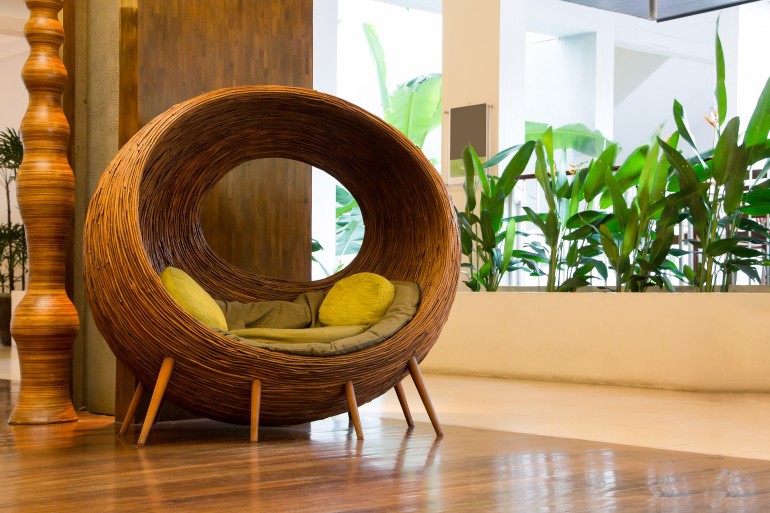


PROS
- Lightweight
- Warmer and softer than metal furniture
- Low maintenance (only needs occasional polishing to retain its beauty and elegance)
- Eco-friendly
- Versatile as it can be weaved into any shape and designs easily
- Resistant to weather
- Water-resistant and rustproof
CONS
- Expensive as it is handcrafted and made from the natural material
- The weaving can loosen over time
- Cushions need to be used to get full comfort for the consumer
7. TREATED RUBBER WOOD
a light-colored medium-density tropical hardwood obtained from the Pará rubber tree


PROS
- Easy to work with
- Durable
- Low maintenance (does not have to be cleaned regularly)
- One of the cheapest solid wood furniture
- Naturally stain resistant
- Naturally resistant to burning though marks are left on the surface if something hot touches it
- Shock absorbent
CONS
- The structure changes when it dries (tends to twist and warp)
- Highly susceptible to damage although it is relatively strong (direct sunlight will discolor the surface of the wood over time)
- Any impacts may create dents
- Slippery when wet.
- Susceptible to swelling due to continued water exposure, or storage in a high humidity environment
- Standard household detergents and abrasive cleaning products leave stains behind which may even cause permanent damage in some circumstances
8. LEATHER
Leather has many variations. With each having its own characteristics. Ranging from a different tone of shading to texture variations


PROS
- It is Hypoallergenic. Which means it does not contain/trap dust mites, allergens etc
- Easy to clean. Unlike fabric, it is more tolerable to stains
- Durable
- Provides an aesthetic look to many household settings
CONS
- Hot and sticky. Leather absorbs the temperature around it. And traps it. On a hot day, leather seats can be unbearably hot to sit on
- Expensive
FURNITURE FINISHES


VARNISH

Primarily used in wood finishing applications where the natural tones and grains in the wood are intended to be visible. It is applied over wood stains as a final step to achieve a film for gloss and protection
PROS
- Grains of wood furniture is still retained
- Enhances the natural wood color
- Prevents dirt, sunlight and water from damaging it
- Easy application
CONS
- Dulls or turns yellow overtime due to direct sunlight
- Clean up of varnish requires lacquer thinner or mineral spirits
- When not mixed properly before application, bubbles will be present when the finish is applied

PENETRATING RESIN

Resins are added to penetrating oils
PROS
- Gives wood a very natural look and feel
- Grain is strongly highlighted
- Durable and withstands heavy wear
- Easy to apply and repair
- Dries clear
- Available in several stain colors
- Resistant to water, alcohol, heat, and abrasion
- Most suitable for open-grained woods
CONS
- Darkens the wood slightly
- Dries slowly
- Not so suitable to very close-grained woods as it may not absorb onto it deeply
- Difficult to remove for future refinishes

SHELLAC

A resin made from the lac bugs of Southeast Asia. It can be applied by either spraying or brushing.
PROS
- Child and pets friendly as it is nontoxic with no fumes
- Easy to work
- Dries quickly
- Provides a hard finish
- Does not turn yellow unlike varnish
- Easy to repair to get rid of scratches or blemishes by applying a new coat over the old coat
- Comes in a variety of colors
- Can be stripped off wood with alcohol
CONS
- Alcohol can cause blemishes and will start to deteriorate if it sits on it for a period of time
- Other chemicals like ammonia can cause problems
- Heat softens it
- Very flammable
- Not easy to apply evenly
- Far less durable than others

LACQUER


The term lacquer is used on usually wood and can be used as a protective agent. Using various lacquer methods, it will produce a hard, durable finish. Lacquer finishes are derived from organic plant resins mixed with a solvent drying agent
A cured lacquer finish can be left with a matte,satin finish or polished to a mirror gloss. Once polished, The lacquer is hard enough to maintain its luster
PROS
- Lacquer finishes are long lasting resistant to stains
- Lacquer does not oxidize. It can be used in an open environment and does not need to be maintained regularly
- Good wear resistance
- Does not feature color or tone changes when it dries
- Improves surface quality due to the reduction in dust adhesion
- The lacquer finish also resists cracking due to heat modulation or wood shrinkage
- Can be recoated without any problems.
CONS
- Lacquer finishes lack in durability, A scratch can expose the wood. Allowing dirt and moisture to get into the crack.
- Wood flooring can sustain damage
- Requires a lot of effort to clean the damaged area
- It is not heat resistant and does not resist chemicals.
- It is also not waterproof, and can penetrate through the lacquer surface

WAX


Application:To apply wax, rub it on and simply wipe it off. Applying wax over any other finish will give the surface a nice lustre and smooth feeling. Wipe it off too fast , and it will give the surface finishing a dull sheen as it dries off. Buffing it with a soft cloth will give it more shine
PROS
- Wax finishes are easy to apply, and are usually used for their first attempt at finishing. Requires no applicators
- It can be applied on any type of wood, Making the wood finishing look rich and natural
CONS
- Lacks durability and is generally not used for a bar top or kitchen tops. As it is prone scratches

OIL


There are 2 types of oils. Drying and non drying. Drying oils will change from a liquid to a solid film when exposed to oxygen. Non drying oil stays wet indefinitely until it is scrubbed off. Since it does not dry, it is usually used for wood treatments rather than wood finishes
PROS
- Oil makes wood look richer and more translucent without adding film to the surface
- Helps restore original color of wood
- Easy application
- Works well on dense wood, and can be shined to a glass like finish with little effort by using oil finishes
CONS
- Not durable and are usually prone to scratches
- Poor at keeping water out of wood
- Hard to use on porous wood such as oak etc. It might require a series of sanding and sealing jobs to get the desired gloss finish
- It might lead to the discoloration of wood


PROS
- Space saving
- Flexibility, customization height for different users with specific needs
- Aesthetics reason, provides a sleek and minimalist look
CONS
- Costly
- Harder to install
- Hard to repair, piping and tanks are hidden in the wall.
2. FLOOR STANDING WATER CLOSET


PROS
- Easier installation
- Wide variety of sizes, colors and styles
- Lower cost, does not require separate purchases for multiple parts
- Easier access to reparation
CONS
- Takes up a lot of space including visual space
- Hard to clean/maintain, cleaning has to be more detailed
DIFFERENT TYPES OF FAUCETS
1. PULL DOWN FAUCET


PROS
- Easily access to difficult corners of the basin
- Minimum splashing in deep sinks
- Wide variety of aesthetic choices available
CONS
- Reduces flexibility as spray could only be pulled downwards,
- Not suitable for shallow sinks
2. PULL OUT FAUCETS


PROS
- Multi purpose which enhances cooking experience
- Advanced flexibility
- Suitable for hollow sinks
CONS
- Contain high chances of basin splashing
3. SINGLE HAND FAUCETS


PROS
- Easy to install
- Easy to operate
- Only require one hole in the fixture for installation
- Widely available in the market ( less expensive )
CONS
- Takes time to change the temperature
- Lacks other useful features of the faucet as it is a simple design
4. DOUBLE HAND FAUCETS


PROS
- Easy to operate
- Contains more specific features to manage hot and cold water separately
- A wide variety of unique design available
CONS
- Repair costs is very expensive
- 2 holes in the fixture is required for installation
5. COMMERCIAL STYLE FAUCETS


PROS
- Able to handle heavy duty water tasks
- Has advanced features for cleaning
- Comes in many design styles and functionality options
CONS
- Slightly expensive as compared to the home kitchen faucets
- Tough to install
6. SEPARATE SPRAY FAUCETS


PROS
- Dual function of the faucet and sprayer
- Hygienic as accessing the corners which is inconvenient
- Detachable spray that can be moved to different places of the sink
CONS
- Multiple holes are required for the installation
- Sprayer creates a lot of splashing effect
- Slightly costly
7. POT FILLER FAUCETS


PROS
- Eliminates the need for lugging large filled pots
CONS
- Potential leaks from the can damage the stove
- Requires detailed cleaning
8. TOUCH-LESS FAUCETS


PROS
- Promotes hygiene and cleanliness
- Very convenient to use
- Provides modern and artistic designs
CONS
- Costly to use
- Maintain and reliant by its constant use of technology
FAUCET FINISHES

CHROME
makes it polished and shiny has a light metal look

STAINLESS STEEL
durable substitute of chrome and maintenance friendly finish

MATTE
smooth and dull appearance finish and maintenance friendly

COPPER
highly polished finish and has a softer appearance

TITANIUM
smooth, slightly glossy grey finish and color consistent

ROSE GOLD
creates a delightful rosy, red tint in the finished material

POLISHED FINISHES
smoother and brighter finish to enhance appearance

BRUSHED FINISHES
distinctive look and retains metallic luster
TYPES OF BATHROOM SINKS
1. BARRIER-FREE


PROS
- Space and clearance
- Convenience
- Increases a greater space for movement
- Allows easier maneuverability for wheelchair or walker
- Takes up little to no floor space due to their slim profile
CONS
- Provides little or no counter space and no storage needs at all below the sink
2. ABOVE COUNTER


PROS
- Easy installation, as they are mounted directly onto a level surface
- Many varying designs
- Does not require specialist taps
- Able to choose your own preferred style and shape
CONS
- Takes up space from the counter top since its installed directly above
3. UNDER-COUNTER

PROS
- Makes cleaning easier
- Looks sleeker ( no raised edges or lip on the top of the counter )
- Cleaner function
- Space saving, more space/visual space on the counter-top
CONS
- Does not work with all counter-tops
- Can fail if installation is not done right
- More costly to install
4. DROP-IN


PROS
- Can be installed in almost every type of counter-top material
- Easier to install
- Less costly as compared to under-counter sinks
CONS
- Gets dirty easily
- Harder to maintain/clean
TYPES OF SHOWER HEADS
1. WALL MOUNT/CEILING MOUNT


PROS
- Convenient, right over your head enjoy your shower in peace
- Variety of designs and materials
CONS
- harder to control/target where the water flows onto your body
2. HAND HELD


PROS
- Adjustable heights to suit different users
- Can be easily mounted and dismounted as and when
- Convenient and easy to operate
CONS
- Costs more since its a separate fixture from existing ones
3. BODY SPRAY


PROS
- Easy installation
- More water efficient as they uses the plumbing for a single shower head
- Less expensive to buy, install and maintain
- Can be incorporated into any size remodel
CONS
- Limited coverage as water flow is coming from only one direction
- Feels a little clunky
- Limited water flow
4. RAIN SHOWER


PROS
- Provides visuals to a space
- Ultimate relaxation when taking a shower
CONS
- Very costly
- Hard to install
TYPES OF BATHTUBS
- Bathing in bathtubs increases feelings of optimism
- It can also ease muscle pain and improves oxygen intake
- However soaking for too long in bathtubs will dehydrate the skin
1. CLAW FOOT


PROS
- Freestanding style, makes a lot of freedom in terms of placement
- Easy installation just about anywhere in your bathroom
- Many types of replica tubs in a wide variety of materials
- Can serve as a literal centerpiece
CONS
- Larger in size, takes up more space
- Costly
2. FREESTANDING


PROS
- Comes in an incredible variety of shapes and sizes
- Painless to install
- Not limited to fit between tiles or floors
CONS
- More expensive as it is more complex to build
- Fewer options in terms of accessible storage
3. CORNER


PROS
- Saves a lot space
- Many varying design, styles, shapes and sizes
- Improves visuals
- Dead or angled space can be fully utilized
CONS
- More expensive
- Entering and exiting the tub will be a difficult task
4. BUILT-IN


PROS
- Affordable option
- More space-economical, as it is sit flush with a wall
- Offer many options in terms of storage since they are mounted flush with wall
CONS
- Flexibility, mostly needed to be placed in a corner
- Lesser designs
- Harder to install due to extra work such as sealing and mounting it
5. WHIRLPOOL


PROS
- Relaxation at your fingertips
CONS
- Very costly to install
- Challenging cleaning regimen
MATERIALS FOR BATHTUBS

PORCELAIN ENAMELED STEEL
glassy inorganic coating that is bonded to metal, creates a rustic look

ACRYLIC
type of finish similar to lacquer, non-toxic, reflective high gloss finish

FIBERGLASS
made of very fine fibers, heat-resistant finish

ENAMEL CAST IRON
extremely durable and non-porous finish that protects the core material of the tub

CAST POLYMER
production of ‘synthetic’ cast products such as marble, onyx and granite to create the finish
BATHROOM MIRRORS
- Placement of mirror near a light source can reflect light back into the room-
- Amplifies the brightness of a space
- Reflect more light and make the toilet corners more attractive
- If the mirror is big, not possible to install lighting above the vanity

FRAMED

LIGHTED

PIVOTED

MEDICINE CABINET

FRAMELESS
TYPES OF STORAGE IN THE BATHROOM
1. OVER THE TOILET


2. BATHROOM VANITY
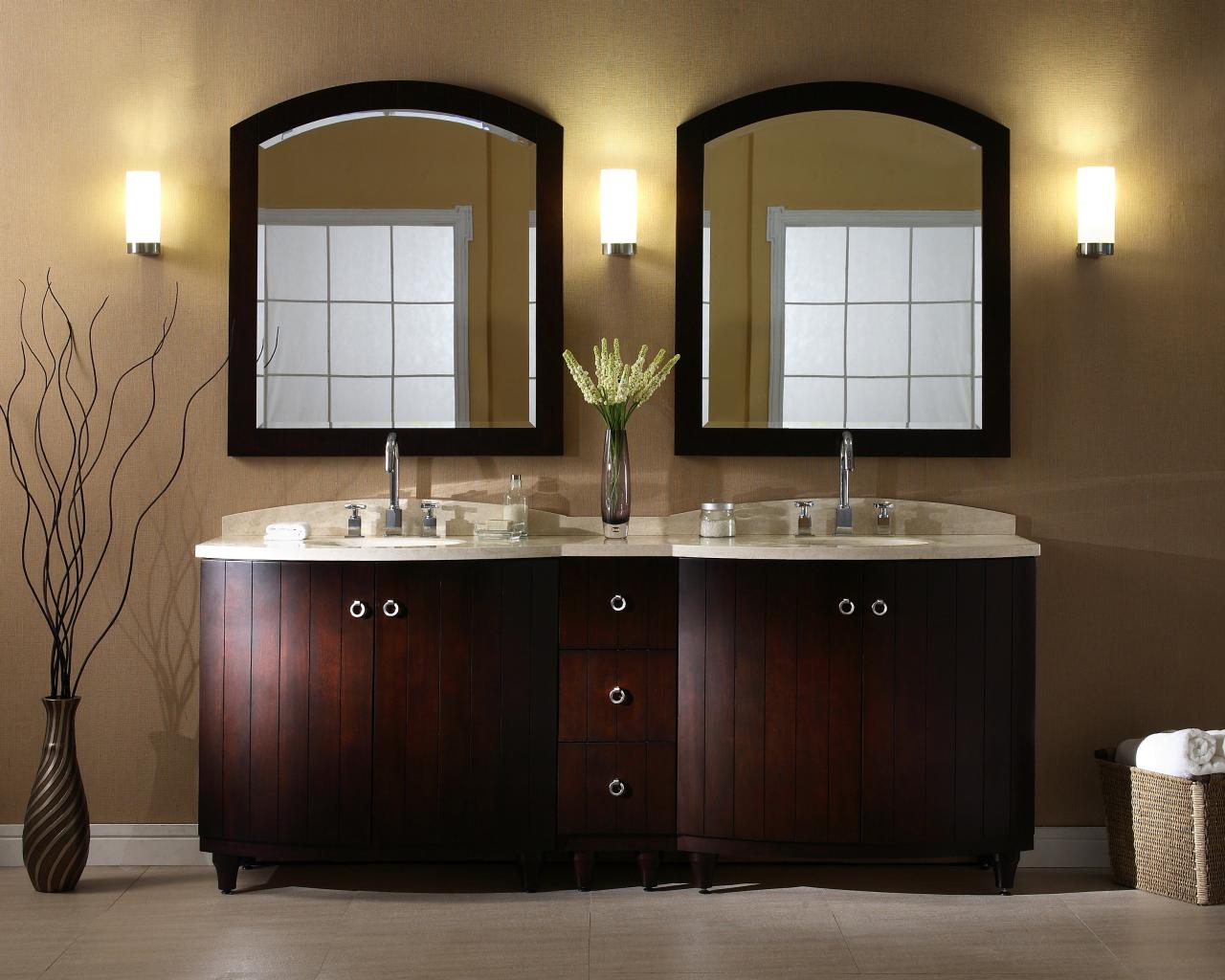

3. MEDICINE CABINET


4. LINEN TOWER


5. FLOOR/WALL CABINETS


6. WALL SHELVES
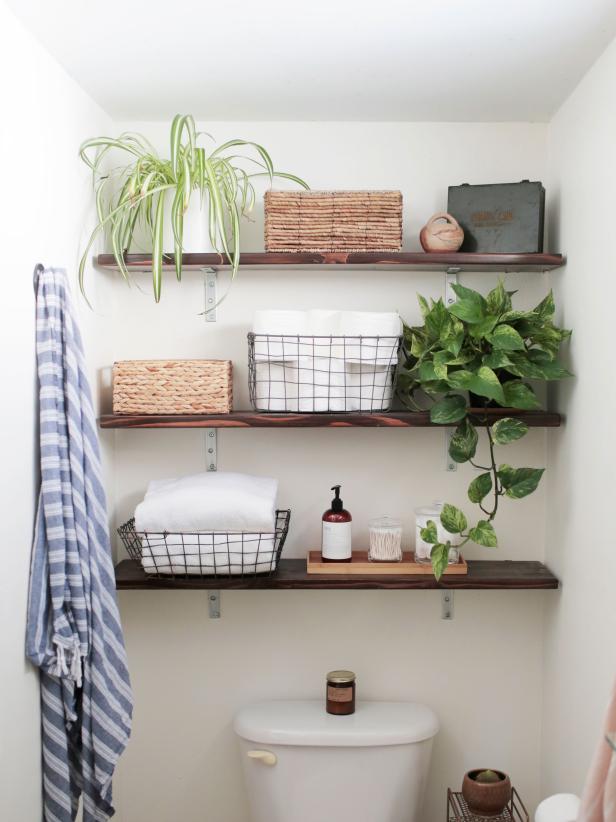

7. STORAGE BENCH


8. HAMPERS AND BASKETS


9. TOWEL RACKS


MAINTENANCE OF SANITARY WARES

DO’S
- clean often
- avoid build-ups
- use liquid cleaners that have a disinfectant effect
DONT’S
- use strong substances
- get paint into contact with the sanitary ware or it will corrode
- let any metallic item get into contact
1. INCANDESCENT


PROS
- Less expensive
- Easier to dim with rheostats
- Produces warmer color compared to fluorescent and tungsten-halogen lamps
- Generates relatively high light output
- Can be dimmed or controlled
- Easy installation
- Available in various shapes, sizes and applications
- Can be switched ON immediately
CONS
- Energy inefficient
- Very short lamp life
- requires air conditioning to cool the room
- Higher operating cost
- Very fragile
- Generates low lumen per watt
Suitable for: Lamps, closets, chandelier, accent lighting & chandeliers
2. FLUORESCENT


PROS
- More energy efficient
- Operates longer
- Better light diffusion
- Lesser heat emission
CONS
- More expensive
- Prone to chemical leakage
- Hard to dim
- Degradation
Suitable for: offices, classrooms, retail stores, hallways & cafeterias
3. COMPACT FLUORESCENT (CFL)


PROS
- Energy saving light bulbs
- High lumen output
- Up to 75% energy savings compared to incandescent lamps
- Long lamp life
CONS
- Some cannot be dimmed and be used with a dimming control
- Takes time to brighten at its fullest
- Contains mercury
4. LIGHT EMITTING DIODE (LED)


PROS
- Compact (gives flexibility in design lighting fixtures)
- Comes in many colors
- Can be focused or scattered with usage of lenses or diffusers
- It is networked and digitally controlled to provide flexibility in colours, brightness and special effects and synchronized with music
CONS
- Might give off uneven spread of light
- Cost more than CFLs
TYPES OF LANGUAGE LIGHT
1. AMBIENT LUMINESCENCE
(GRADED WASHES)

- No focus
- Dissolves the details
- Comfortable lighting- helps people to relax
- Produces shadow less illumination
- Minimizes form and bulk
2. FOCAL GLOW
(HIGHLIGHT)

- The direction of space
- Draws attention
- Pulls together diverse parts
- Separates the important from unimportant
3. PLAY OF BRILLIANCE
(SHARP DETAIL)

- A decoration
- Excites the optic nerves
- Simulates the body and spirit
- Quickens appetite
- Awakens curiosity
- Sharpens the wit
TYPES OF LIGHTING
1. TASK LIGHTING
(SPECIFIC)

- Increased illluminance
- Helps to accomplish a specific task
- Show contrast
- Applicable to both at home and in the working environment
2. DECORATIVE LIGHTING


TYPES OF LIGHTING TECHNIQUES
1. GRAZING


Used to emphasize the material used, structure and surface properties of walls and facades
2. BACK LIGHTING


An Illumination that is directly behind an object
3. UP LIGHTING


A luminaire that directs the light up
4. RECESSED SPOT


A luminaire mounted in a ceiling distributing light in a concentrated area
5. SPOTLIGHT PROJECTOR


A device illuminating a very precise area
WAYS OF DISTRIBUTING LIGHTS
1. DIRECT


2. INDIRECT


3. SEMI-DIRECT

4. SEMI-INDIRECT

5. DIFFUSED


TYPES OF INSTALLATION OF LIGHTS
1. RECESSED

Luminaire mounted in a ceiling distributing light in a concentrated area
2. SURFACE MOUNTED


Luminaire mounted on top of a surface’s face
3. SUSPENDED


Lighting fixture hung from the ceiling by rigid or flexible supports, leaving an air space between the luminaire and the ceiling
4. WALL MOUNTED
(SCONCE)


Lighting fixture mounted on vertical surfaces
5. COVE


A form of indirect lighting built into ledges, recesses, or valances in a ceiling or high on the walls of a room
6. TRACK LIGHTING


Individual fixtures,”track heads”, can be positioned anywhere along the track which provides electric power
7. TROFFER


Rectangular light fixture that fits into a modular dropped ceiling grid

